Description
An Introduction of IGNOU MHI-107 Guess Papers
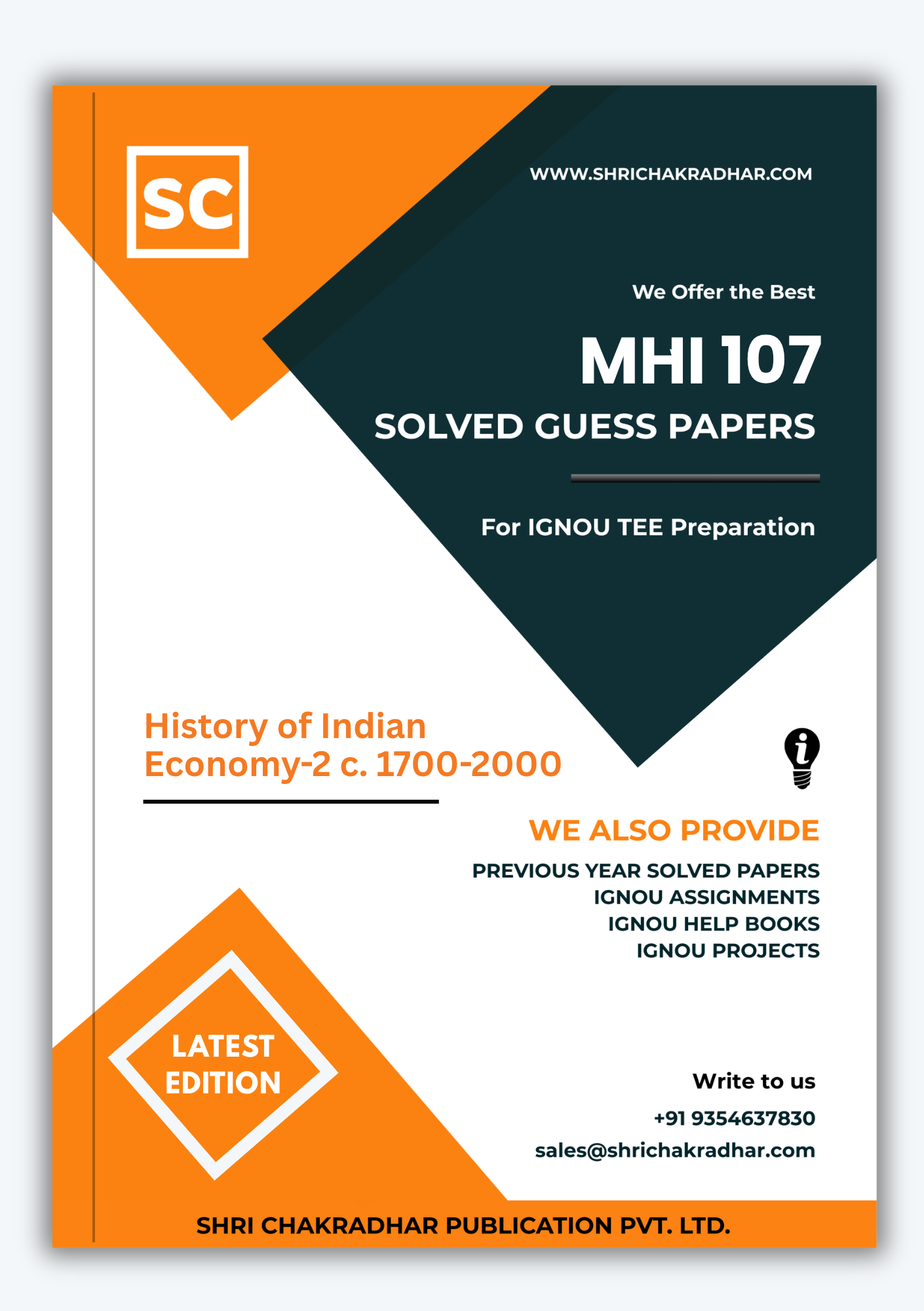
IGNOU MHI-107, History of Indian Economy-2 c. 1700-2000, is an important paper in the MAHI programme. It helps students understand major economic changes in India from the eighteenth century to the modern period, including colonial economic policies, agriculture, trade, industry, revenue systems, deindustrialization, planning, and development.
An ignou MHI-107 guess paper is useful for students who want focused revision before the term-end exam. Since this paper covers a long historical period, learners need organized solved material to revise important events, concepts, and economic debates.
The ignou MHI-107 guess paper 2026 is prepared for English medium students who want to practise important questions in a simple and exam-oriented format. It supports better understanding of likely question areas and improves answer-writing confidence.
Students searching for an ignou MHI-107 guess paper pdf can use this product for quick and convenient revision. The ignou MHI-107 solved guess paper includes solved answers that help learners revise historical arguments, economic trends, and IGNOU’s MHI-107 exam pattern in a structured way.
Product Details
- Course Code: MHI-107
- Programme: MAHI (MA History)
- Subject/Paper Name: History of Indian Economy-2 c. 1700-2000
- Product Type: Solved Guess Paper
- Medium: English
- Website: shrichakradhar.com
- Service Type: MHI-107 Solved Guess Papers (Soft Copy / PDF) (Instant Download)
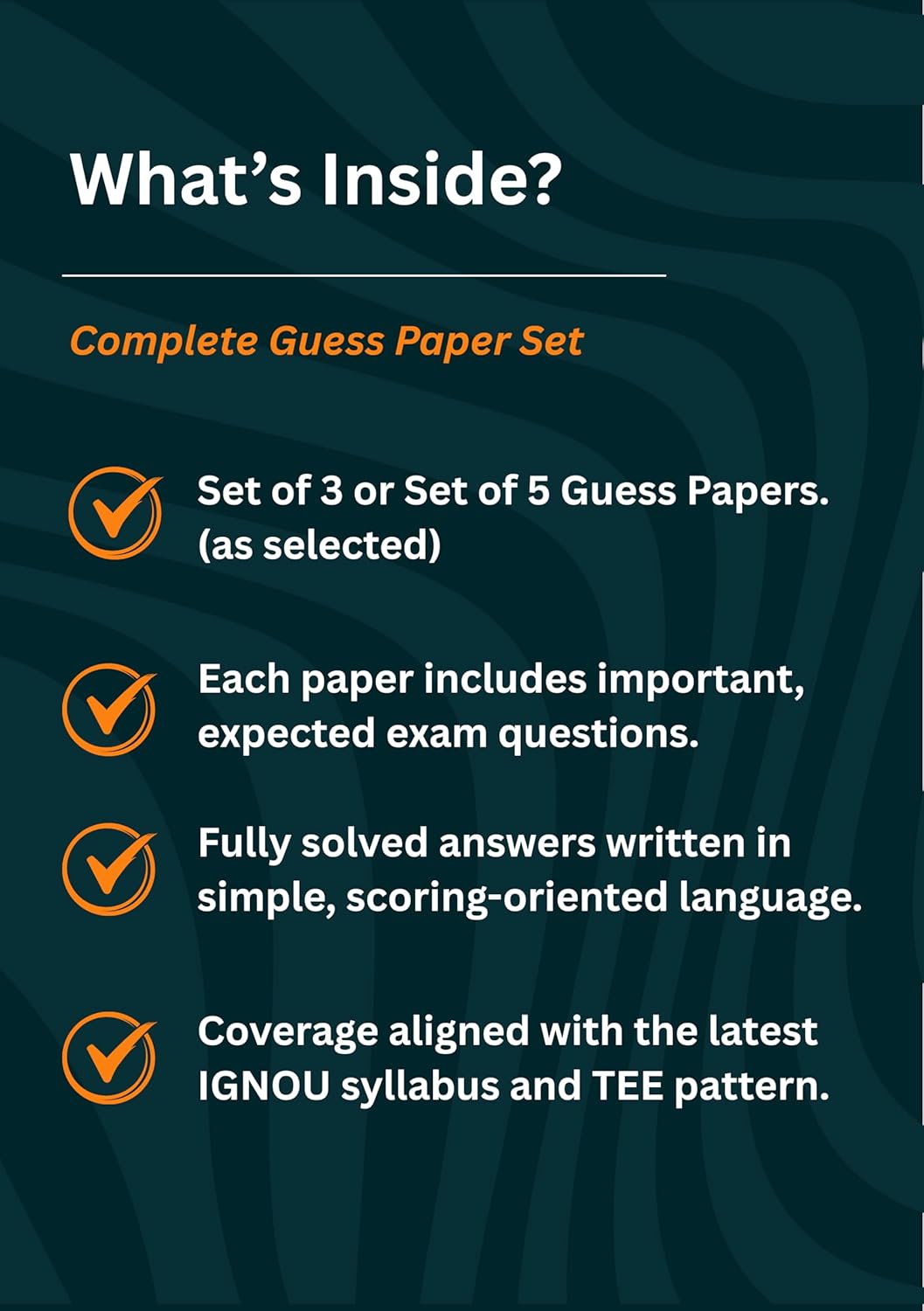
- Covers: Set of 3 Solved Guess Papers
- Delivery: Redirect to Download page after Payment + Downloadable PDF file via E-Mail
- Best For: Revision, Practice, and Understanding IGNOU’s MHI-107 Exam Pattern
- Support & Contact: For order-related questions, or assistance in selecting the right IGNOU MHI-107 solved guess paper PDF, contact us on our WhatsApp Helpline or email us at [email protected].
Why IGNOU MHI-107 Guess Papers Are Important
IGNOU MHI-107, History of Indian Economy-2 c. 1700-2000 for the MAHI programme, requires systematic revision because the paper includes long-term economic developments across colonial and post-colonial India. Students need to understand policies, institutions, economic structures, and historical interpretations.
Guess papers help students revise the syllabus in a planned manner. They highlight important questions and guide learners toward topics that may be useful for the term-end exam.
These papers also support answer-writing practice. By studying solved answers, students can learn how to present historical background, explain economic changes, discuss causes and effects, and write balanced conclusions. For final preparation, MHI-107 Important Questions can make revision more focused and manageable.
About This MAHI Course MHI-107 Solved Guess Papers
The MAHI course MHI-107, History of Indian Economy-2 c. 1700-2000, studies the transformation of the Indian economy from the late pre-colonial period to the twentieth century. It includes topics such as agrarian systems, colonial revenue policies, commercialization of agriculture, decline of handicrafts, industrialization, railways, foreign trade, economic nationalism, planning, and post-independence development.
This IGNOU MHI-107 Solved Guess Paper is prepared for English medium students who need exam-focused revision support. The material is arranged in a student-friendly format so that learners can revise important topics without confusion.
The set of 3 solved guess papers gives students additional practice before the examination. It is useful for self-study, last-minute revision, and understanding how history answers can be written in a clear, chronological, and analytical manner.
How IGNOU MHI-107 Solved Guess Papers Are Prepared
IGNOU MHI-107 Solved Guess Papers are prepared by studying the course syllabus, important units, previous exam trends, and major themes from the study material. The aim is to select questions that are relevant to History of Indian Economy-2 c. 1700-2000 and useful for exam preparation.
The preparation process includes identifying high-value topics such as the eighteenth-century economy, colonial land revenue systems, drain of wealth, deindustrialization, commercialization of agriculture, growth of railways, industrial development, economic nationalism, planning, and post-1947 economic policies.
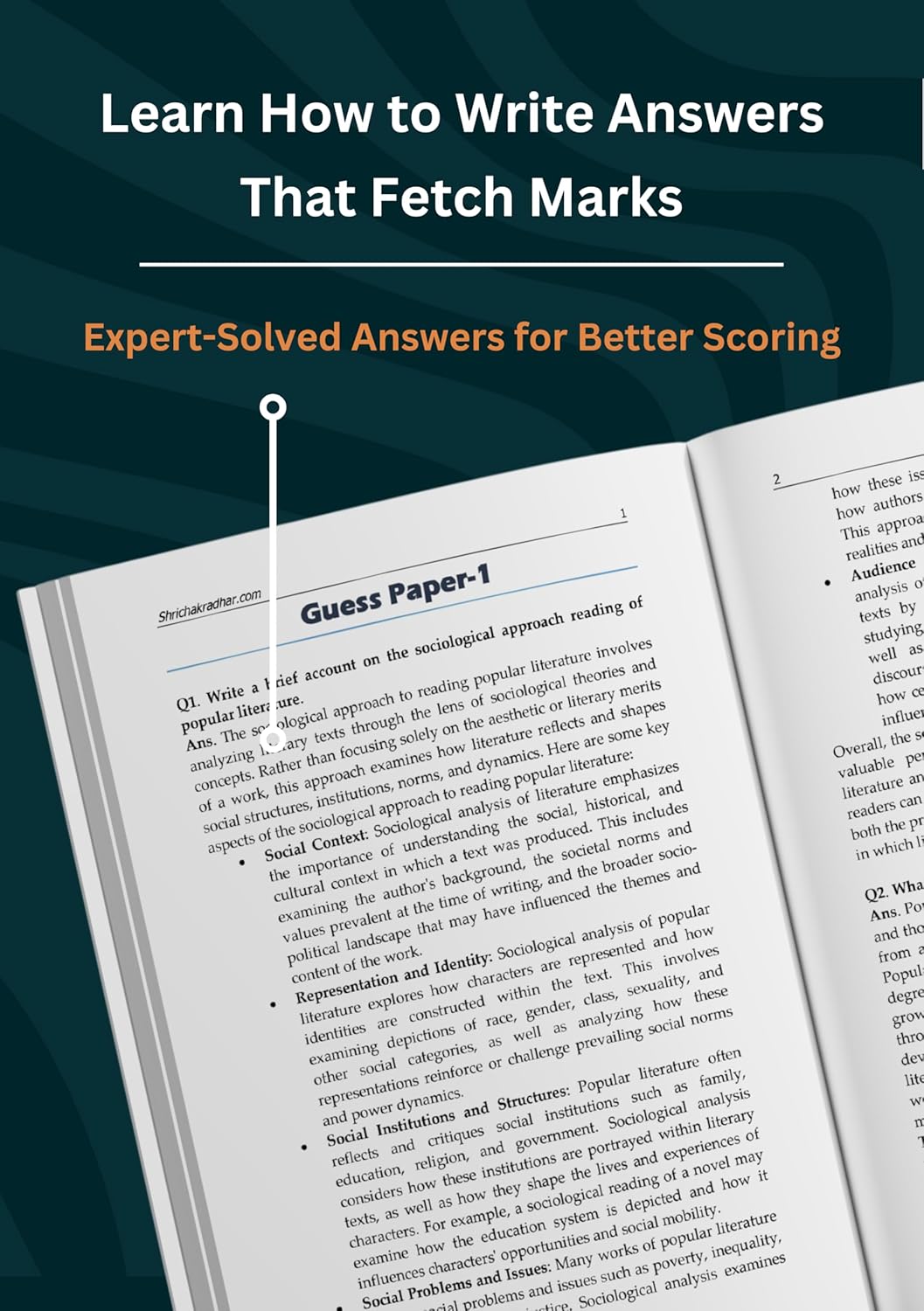
Answers are written in simple English with a clear academic structure. Each answer supports concept clarity, historical explanation, and answer presentation. This helps students understand the topic and prepare their final answers in their own words.
Why Choose Our Expert-Written IGNOU MHI-107 Solved Guess Papers?
Students may choose these expert-written IGNOU MHI-107 Solved Guess Papers because they are prepared specifically for the MAHI course code MHI-107. The content focuses on History of Indian Economy-2 c. 1700-2000 and gives students relevant support for exam preparation.
Key benefits include:
- Course-code-specific content for MHI-107
- English medium solved answers in simple academic language
- Set of 3 solved guess papers for wider practice
- Important question coverage for focused revision
- Clean and well-structured answer format
- Instant PDF access after payment
- Useful for understanding IGNOU’s term-end exam pattern
- Helpful for historical analysis, revision, and answer presentation
This IGNOU MHI-107 Solved Guess Paper PDF is meant for academic reference and study support only. Students should use it to understand important topics, practise answers, and prepare final responses in their own words.
30+ High Probability Questions from IGNOU MHI-107 Study Material
- Discuss the main features of the Indian economy around 1700.
- Explain the nature of agrarian economy in eighteenth-century India.
- Describe the impact of colonial rule on the Indian economy.
- Explain the Permanent Settlement and its effects.
- Discuss the Ryotwari system and its features.
- Explain the Mahalwari system of land revenue.
- Compare different colonial land revenue systems.
- Discuss commercialization of agriculture in colonial India.
- Explain the impact of colonial policies on Indian peasants.
- Describe the causes of rural indebtedness.
- Explain the drain of wealth theory.
- Discuss Dadabhai Naoroji’s views on economic drain.
- Explain deindustrialization in colonial India.
- Discuss the decline of Indian handicrafts.
- Describe the growth of modern industries in India.
- Explain the development of cotton textile industry.
- Discuss the growth of jute industry.
- Explain the role of railways in colonial India.
- Discuss the impact of railways on trade and markets.
- Describe foreign trade under British rule.
- Explain the role of plantations in colonial economy.
- Discuss famine and food scarcity in colonial India.
- Explain the economic impact of the First World War on India.
- Discuss the Great Depression and Indian economy.
- Explain economic nationalism in India.
- Describe the Swadeshi movement and its economic importance.
- Discuss industrial labour in colonial India.
- Explain the growth of banking and finance in colonial India.
- Discuss the nature of Indian economy at the time of independence.
- Explain the objectives of planning in post-independence India.
- Discuss the First Five Year Plan.
- Explain land reforms after independence.
- Describe the Green Revolution and its impact.
- Discuss public sector development in India.
- Explain major economic changes in India between 1950 and 2000.
IGNOU MHI-107 Sample Question Paper (TEE Format Template)
The following sample format helps students understand how IGNOU term-end exam questions may be arranged. Students should also check official previous year papers for exact pattern and instructions. For official papers, use this link: Download IGNOU MHI-107 Question Paper
Sample TEE Format Template
Section A: Long Answer Questions
Answer any two questions.
- Discuss the impact of colonial land revenue systems on Indian agriculture.
- Explain the drain of wealth theory and its importance in Indian economic history.
- Analyse the process of deindustrialization in colonial India.
Section B: Short Answer Questions
Answer any four questions.
- Write a note on Permanent Settlement.
- Explain commercialization of agriculture.
- Discuss the role of railways in colonial India.
- Explain economic nationalism.
- Describe the importance of planning after independence.
Section C: Very Short Notes
Answer any five questions.
- Ryotwari system
- Drain of wealth
- Jute industry
- Swadeshi
- Green Revolution
- Public sector
5 FAQs
- What is the IGNOU MHI-107 Guess Paper?
The IGNOU MHI-107 Guess Paper is a revision PDF with important and probable questions for the MAHI History of Indian Economy-2 exam. - Is the IGNOU MHI-107 Guess Paper useful for English medium students?
Yes, the IGNOU MHI-107 Guess Paper is prepared in English and helps students revise economic history topics in an exam-focused way. - What is included in the IGNOU MHI-107 Solved Guess Paper?
The IGNOU MHI-107 Solved Guess Paper includes a set of 3 solved guess papers with important questions and structured PDF answers. - Is the IGNOU MHI-107 Solved Guess Paper based on the latest 2026 syllabus?
Yes, the IGNOU MHI-107 Solved Guess Paper is prepared for the 2026 exam session with syllabus-relevant and course-focused topics. - Can the IGNOU MHI-107 Solved Guess Paper replace official study material?
No, the IGNOU MHI-107 Solved Guess Paper PDF is for reference, revision, and practice. Students should also study the official IGNOU material.
Download IGNOU MHI-107 Guess Papers Solved PDF:
Get focused revision support for MHI-107 with a solved guess paper PDF prepared for MAHI English medium students. It is useful for important questions, practice, and exam pattern understanding.
To buy or get help selecting the right PDF, contact here: Get on WhatsApp