

Description
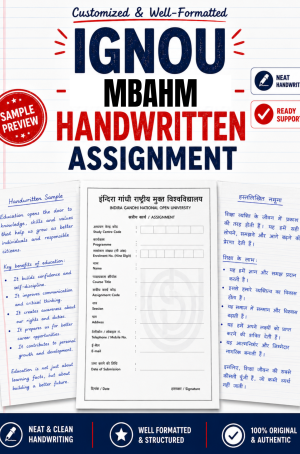
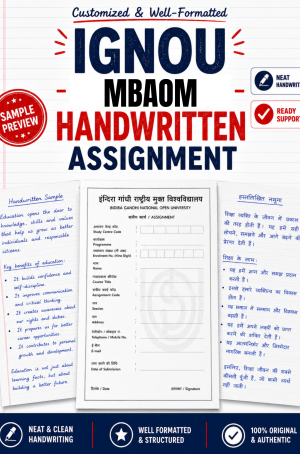
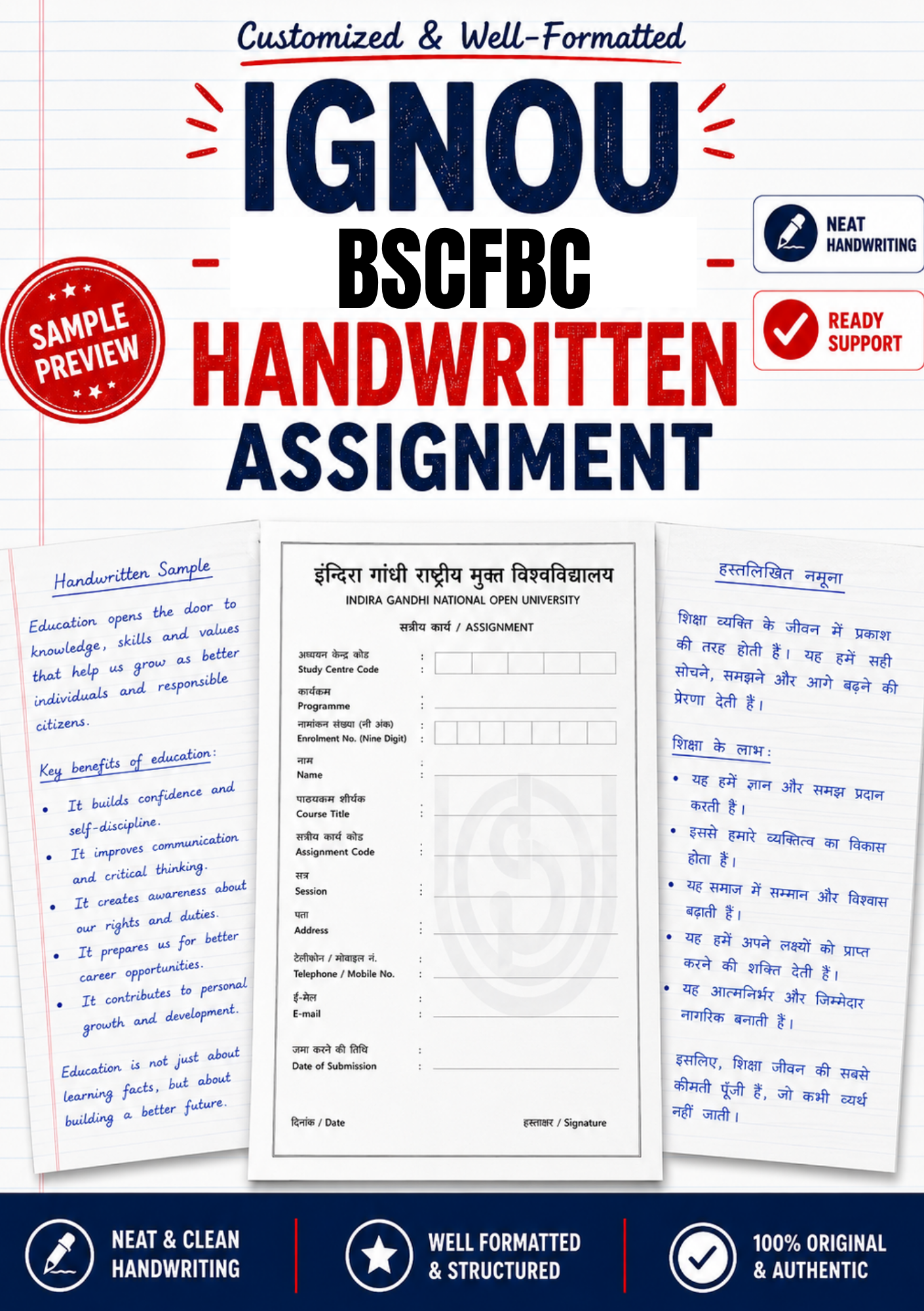
In short. BSCFBC is the Bachelor of Science (Biochemistry) Major and Honours degree taught by IGNOU’s School of Sciences, a four-year programme in which three years and 120 credits earn a Major degree and a fourth year and 160 credits earn Honours, and its discipline core is built from ten theory papers under the BBCCT prefix, each locked to a laboratory partner under the BBCCL prefix that has to be taken with it. Only the ten BBCCT theory codes carry a Tutor Marked Assignment; the ten BBCCL laboratory codes are assessed by log book, guided counselling sessions and a viva, and they generate no assignment paper to write out at all. Shri Chakradhar Publication prepares the handwritten set for the codes that do carry a paper, one code at a time, written out in ink on foolscap sheets because that is the paper size the School of Sciences booklets themselves specify, with a free IGNOU-format front page and a copy of the official question paper in the same parcel. The rate is ₹320 per subject, hard copy only, with courier included in that price and no separate shipping charge. There is no minimum order: one subject or fourteen, same rate. Assignments carry 30 per cent of the final course result and the term-end examination carries the remaining 70 per cent. The BBCCT booklets add that the examination form for a course cannot be filled until that course’s assignment has gone in. Delivery depends on your pin code and is confirmed for your order before you pay. No figure is promised on this page.
Inside the BSCFBC Parcel When It Reaches You
A BSCFBC order is counted in course codes, never in semesters, because two learners registered in the same year rarely hold the same list. The discipline core is fixed at ten theory papers, but the minor discipline, the four skill enhancement slots, the two ability enhancement slots, the single interdisciplinary course and the single value-added course are all chosen, and a learner repeating one backlog BBCCT paper alongside a fresh semester holds a list that exists nowhere else. So the parcel is assembled against the codes on your own registration record rather than against a semester template.
Four physical things travel together for every code you order. The first is the answer set itself, written out by hand in ink, each question numbered as the booklet numbers it, diagrams drawn rather than pasted, and the pages tied rather than clipped into a plastic folder. The second is the IGNOU-format front page, supplied free with every subject, left unfilled in the places that are yours to fill: enrolment number, name, address, signature and date. The third is a printed copy of the official Tutor Marked Assignment question paper for that code and that validity year, which matters more for BSCFBC than for most programmes because the Delhi Regional Centre circular for a recent session asked learners to attach a photocopy of the downloaded question paper and their identity card alongside the answer sheets. The fourth is nothing at all in digital form. No soft copy or PDF is sold.
What is deliberately absent is as important as what is present. There is no scanned version emailed afterwards, no drive link, no editable file. The service exists to hand you a physical set you can carry into the Study Centre allotted to you, review, sign and submit. The BBCCT-111 booklet is blunt about why an editable file would be beside the point: it instructs learners to write the responses in their own handwriting and not to print or type the answers.
Foolscap, Not A4, and Why That Is Not a Typo
Every BBCCT booklet read for this page carries the same paper instruction, and it is not the instruction most blogs repeat. BBCCT-101 and BBCCT-103 both say to use only foolscap size writing paper, but not of very thin variety, and to leave a 4 cm margin on the left, top and bottom of the answer sheet. BBCCT-111 repeats the foolscap requirement, tells learners to tie all the pages carefully, and then changes the margin rule: 4 cm on the left and at least four blank lines between each answer, so that the evaluator has room to write in the margin.
Foolscap is the taller, narrower sheet still sold across India as legal or full-scape ruled paper, and it is not the same as A4. This is worth pausing on, because a Regional Centre circular for one recent session told learners to use A-4 white ruled paper, general assignment guidance circulating online specifies plain unruled A4 at 75 to 80 GSM, and the handwritten category page on this store currently says A4 as well. The School of Sciences booklets that a BSCFBC learner actually downloads say foolscap. Where an instruction that reaches you differs from the one printed on your own booklet, the safe move is to ask your Study Centre coordinator which they will accept, and to say which answer you were given when you send your codes, because the set is written to match.
Where the ₹320 Stops and Starts
The rate is ₹320 per subject, hard copy only, with courier included in that price and no separate shipping charge. A subject means one course code with one Tutor Marked Assignment paper against it, so BBCCT-101 is one subject and BBCCT-103 is another, and a learner ordering both is quoted for two. The IGNOU-format front page is free with every subject. The copy of the question paper is included. The courier is inside the ₹320 and is never added afterwards as packing, handling or fuel.
Three things are covered that vendors commonly charge extra for. The service covers all mediums IGNOU issues the TMA paper in, at the same price, which for BSCFBC means the English and Hindi versions the School of Sciences publishes side by side for the BBCCT papers. Any session is accepted, current cycle or older, including backlog courses, at the same ₹320 per subject. And Send a photo of a page you have written yourself and the handwritten set is matched to your handwriting at no extra charge.
Three things are outside it, stated plainly. Laboratory courses are outside it, because the BBCCL papers carry no assignment to write. Your Study Centre submission is outside it, because only you can hand the set in and only you can sign the declaration. And the outcome is outside it. No claim is made about the marks any assignment will receive, about how an evaluator will assess it, or about whether it will be accepted. Assignment evaluation is entirely a matter for IGNOU. The BBCCT booklets set the assignment pass mark at 35 per cent of 100 and reserve the right to reject a paper found to be copied from another learner’s response sheet, and neither of those decisions belongs to a publisher.
Reference PDF or Written Set: Which One a BSCFBC Learner Actually Needs
These two products are confused constantly, and the confusion costs money in both directions. A solved assignment is a soft-copy reference file of model answers prepared against one course code and one session, downloaded and read. A handwritten assignment is the answer set written out by hand on paper and submitted in hard copy at the Study Centre allotted to you. They are not two grades of the same thing. One is something you read from; the other is something you hand in.
| Point of difference | Solved assignment | Handwritten assignment |
|---|---|---|
| What it physically is | A PDF file for one BBCCT code and session | Paper sheets written out in ink, tied together |
| What you do with it | Read it, understand it, then write your own answers | Review it, complete and sign the front page, submit it |
| Can it be submitted as it stands | No. A printed or typed file is not a submission | Yes, that is what it is built to be |
| Who it suits | A learner who will write but wants a reference | A learner short of time, or writing for many codes at once |
| Paper size question | Does not arise | Decided by your booklet, which for BBCCT says foolscap |
| Rate on this store | Listed on the biochemistry solved-assignment shelf | ₹320 per subject, courier included |
Scroll the table sideways on a narrow screen.
IGNOU’s own wording settles the part learners most want settled. The BBCCT-111 booklet instructs learners to write the responses in their own handwriting and not to print or type the answers, and it adds that answers should not be copied from the Units or Blocks sent by the University, because writing in your own words helps you grasp the study material. The same booklet says that if copying from another learner’s response sheet is noticed, the assignment will be rejected. Read together, those lines mean a downloaded reference file is legitimate as something to learn from and illegitimate as something to hand in on its own. That is the honest boundary, and it is the reason this page does not sell a PDF.
If a reference file is what you actually want for BBCCT-101, BBCCT-103 or any other biochemistry code, it is not sold here. It sits on the store’s biochemistry solved-assignment shelf, filed under the BSCBCH programme code, which is where every BBCCT and BBCET reference file on this store currently lives. That shelf is the right destination for the reading material and this page is the right destination for the writing. Ordering both for the same code is common and is not a mistake: one is read before the examination, the other is submitted before the examination form opens.
Ten BBCCT codes, one rate, no bundle pricing. The rate is ₹320 per subject, hard copy only, with courier included in that price and no separate shipping charge. There is no minimum order: one subject or fourteen, same rate.
Send the codes exactly as your registration record prints them, add the validity year shown on the booklet you downloaded, and add your delivery pin code. Those three lines are enough for a quote.
Ten BBCCT Theory Codes This Order Can Cover
The July 2026 IGNOU Common Prospectus prints the BSCFBC discipline specific course table as ten rows, and every row is a pair rather than a single course. A theory paper under the BBCCT prefix worth four credits sits alongside a laboratory paper under the BBCCL prefix worth two credits, the two add to six credits, and the prospectus marks every single row with the same remark: to be taken together. Ten pairs at six credits give the 60 credits the prospectus assigns to the discipline specific category.
Two features of this table surprise learners who come to it expecting an ordinary semester list. The first is that the code numbers do not run in semester order. The third semester holds BBCCT-107 and BBCCT-111 while the fourth holds BBCCT-109 and BBCCT-117, so a learner who assumes the next number is the next paper will download the wrong booklet. The second is that four theory codes in the same numeric family are absent from this table entirely. BBCCT-105, BBCCT-121, BBCCT-125 and BBCCT-127 exist, have live study material and in some cases live 2026 assignment booklets, but they belong to the older B.Sc. Honours Biochemistry programme rather than to this one. More on that below.
| Theory code | Official title | Semester | Theory credits | Laboratory partner |
|---|---|---|---|---|
| BBCCT-101 | Molecules of Life | 1st and 2nd | 4 | BBCCL-102 |
| BBCCT-103 | Cell Biology | 1st and 2nd | 4 | BBCCL-104 |
| BBCCT-107 | Enzymes | 3rd | 4 | BBCCL-108 |
| BBCCT-111 | Membrane Biology and Bioenergetics | 3rd | 4 | BBCCL-112 |
| BBCCT-109 | Metabolism of Carbohydrates and Lipids | 4th | 4 | BBCCL-110 |
| BBCCT-117 | Gene Organisation, Replication and Repair | 4th | 4 | BBCCL-118 |
| BBCCT-113 | Metabolism of Amino acids and Nucleotides | 5th | 4 | BBCCL-114 |
| BBCCT-123 | Gene Expression and Regulation | 5th | 4 | BBCCL-124 |
| BBCCT-119 | Hormone: Biochemistry and Function | 6th | 4 | BBCCL-120 |
| BBCCT-115 | Human Physiology | 6th | 4 | BBCCL-116 |
Scroll the table sideways on a narrow screen.
The discipline core is only half of a BSCFBC registration. The prospectus sets the credit load at 20 per semester and 120 in total for the Major degree, and the remaining 60 credits come from five further categories that the four-year undergraduate programmes share with the Bachelor of Arts Major and Honours lists. Those codes carry Tutor Marked Assignments in the ordinary way, which is why a BSCFBC order frequently contains no BBCCT code at all in the first year.
| Category | Courses | Credits each | Category total | Representative codes |
|---|---|---|---|---|
| Discipline specific core | 10 pairs | 4 plus 2 | 60 | BBCCT-101 with BBCCL-102 |
| Minor, vocational and discipline specific | 6 | 4 | 24 | BBYCT 131, BCHCT 131, BZYCT 131, BSTM 161, BPHCT 131 |
| Skill enhancement | 4 | 4 | 16 | BCHS 183, BANS 183, BMPS 183, ENV 104 |
| Ability enhancement compulsory | 2 | 4 | 8 | BEVAE 181, then BEGAE 182 or BHDAE 182 |
| Interdisciplinary | 1 | 6 | 6 | BPCG 171, BSOG 171, BEGG 171 |
| Value added | 1 | 6 | 6 | BEDSV 101, BNME 001 |
| Stated programme total | 120 | Major degree, six semesters |
Scroll the table sideways on a narrow screen.
Those category totals were added up rather than assumed. Sixty plus twenty-four plus sixteen plus eight plus six plus six is 120, which matches the figure the prospectus states for the Major degree, and the per-semester grid reaches the same place by a different route at 20 credits in each of six semesters. That arithmetic check matters, because the prospectus prose describing the same categories does not add up, and the discrepancy is set out in the warning box further down.
The minor discipline list is worth reading closely if you are choosing. BSCFBC prints its own minor list rather than borrowing one, and it offers Botany, Chemistry, Geology, Physics, Zoology and Statistics, with Geology alone offering four codes and Physics offering four including a laboratory course, BPHL 103. A minor has to come from a discipline other than your Major, so a BSCFBC learner cannot take biochemistry codes as minors. Reference material for several of these minor codes sits on the store’s science guess paper shelf for the B.Sc. programmes, since the same BBYCT, BCHCT and BZYCT codes are taught across several science degrees.
The Ten BBCCL Laboratory Codes That Carry No Assignment At All
This section exists because quoting a learner for twenty codes when only ten have papers would be dishonest, and because learners regularly ask for it. Every BBCCL code in the BSCFBC table is a laboratory course worth two credits, and IGNOU’s own biochemistry course pages describe how they are run and assessed. A lab course is an intensive residential exercise requiring about a week for two credits, structured as fourteen sessions of four hours over the week, the first introductory and the rest built on the exercises in the manual, with guided work under an Academic Counsellor.
Assessment for these courses has nothing in common with a Tutor Marked Assignment. Marks come from continuous performance across the laboratory sessions, from the maintenance of a log book and record, and from a viva-voce at the end, with a proportion of the marks reserved for an assigned experiment performed in front of the counsellor. There is no question paper to answer, no booklet to download, and therefore nothing for a writing service to write. A handwritten set cannot substitute for attendance at a lab session, and no one should sell you one that claims to.
| Laboratory code | Paired with | Credits | How it is assessed |
|---|---|---|---|
| BBCCL-102 | BBCCT-101 Molecules of Life | 2 | Lab sessions, log book, viva |
| BBCCL-104 | BBCCT-103 Cell Biology | 2 | Lab sessions, log book, viva |
| BBCCL-108 | BBCCT-107 Enzymes | 2 | Lab sessions, log book, viva |
| BBCCL-112 | BBCCT-111 Membrane Biology and Bioenergetics | 2 | Lab sessions, log book, viva |
| BBCCL-110 | BBCCT-109 Metabolism of Carbohydrates and Lipids | 2 | Lab sessions, log book, viva |
| BBCCL-118 | BBCCT-117 Gene Organisation, Replication and Repair | 2 | Lab sessions, log book, viva |
| BBCCL-114 | BBCCT-113 Metabolism of Amino acids and Nucleotides | 2 | Lab sessions, log book, viva |
| BBCCL-124 | BBCCT-123 Gene Expression and Regulation | 2 | Lab sessions, log book, viva |
| BBCCL-120 | BBCCT-119 Hormone: Biochemistry and Function | 2 | Lab sessions, log book, viva |
| BBCCL-116 | BBCCT-115 Human Physiology | 2 | Lab sessions, log book, viva |
Scroll the table sideways on a narrow screen.
One practical consequence follows. Because theory and laboratory are locked together as a single six-credit unit that the prospectus says must be taken together, a BSCFBC learner cannot clear a pair by assignment alone. The written work covers the BBCCT half. The BBCCL half needs your physical attendance at the Learner Support Centre on the schedule your centre publishes, and that is a date to protect in your own calendar well before any assignment deadline.
Four Biochemistry Documents, Four Different Answers
The research behind this page read the July 2026 Common Prospectus against three live 2026 assignment booklets from the School of Sciences and against the store’s own pages. They do not agree with each other. None of these is a catastrophe, and all of them are ordinary institutional drift, but each one has cost some learner a wasted download or a rejected sheet, so they are printed here rather than smoothed over.
Disagreements found while preparing this page, including this store’s own.
1. Two biochemistry bachelor degrees share one code family. BSCFBC is the four-year Major and Honours degree. BSCBCH is the older B.Sc. Honours Biochemistry degree under the choice based credit system, also in the School of Sciences, with a 148-credit structure built from fourteen BBCCT core pairs. Both draw on the same BBCCT and BBCCL numbering. A search for a BBCCT code will return material for whichever programme the publisher happened to file it under, and this store has filed all of it under BSCBCH.
2. Four theory codes belong to one degree and not the other. BBCCT-105 Proteins, BBCCT-121 Concepts in Genetics, BBCCT-125 Genetic Engineering and Biotechnology and BBCCT-127 Immunology appear in the BSCBCH core list in the prospectus and do not appear in the BSCFBC table at all. BBCCT-121 has a live 2026 assignment booklet whose cover names only BSCBCH. If one of these codes is on your BSCFBC registration record, your record is the document that decides and the codes should be confirmed with your Regional Centre before anything is written.
3. A code the prospectus gives to BSCFBC has a booklet that does not mention BSCFBC. BBCCT-111 Membrane Biology and Bioenergetics sits in the BSCFBC third semester in the July 2026 prospectus. Its own 2026 assignment booklet is headed for the Bachelor (Honours) Degree in Biochemistry, BSCBCH, and the letter inside refers only to the B.Sc. Honours programme guide. The BBCCT-101 and BBCCT-103 booklets for the same year name both programmes on the cover. Same school, same session, three different applicability statements.
4. One booklet prints two different end dates for itself. The BBCCT-103 cover gives the validity as running to 30 December 2026 and then, on the very next line, gives the last date for submission as on or before 31 December 2026. Page two of the same booklet gives 31 December 2026 again. The 30 December on the cover appears to be a slip, but it is printed, and it is the kind of thing worth knowing before an argument at a submission counter.
5. One booklet announces parts that the paper does not contain. The BBCCT-101 letter tells learners the assignment consists of three parts, Part A, B and C. The paper that follows prints ten numbered questions with no parts at all. BBCCT-103 prints ten questions and no parts and does not claim otherwise. BBCCT-111 genuinely does split into Part A and Part B of 50 marks each. The instruction on BBCCT-101 looks like a template carried over from a different paper.
6. Paper size is contested between IGNOU’s own documents. All three BBCCT booklets specify foolscap size writing paper. A Delhi Regional Centre circular for a recent session specified A-4 white ruled paper. Widely circulated assignment guidance specifies plain unruled A4 at 75 to 80 GSM. Your booklet and your Study Centre coordinator outrank all secondary sources.
7. The submission deadlines circulating online are not the School of Sciences pattern. Aggregator sites publish 31 March for the June term-end examination and 30 September for the December one, with extensions announced on top. The BBCCT booklets print no such pair. They print a calendar-year validity window and tell learners to submit according to the schedule made by the study centre. Details are in the next section.
8. The prospectus category prose does not add up to its own total. Reading the four-year undergraduate credit categories literally, the discipline core of 60, minors of 24, electives of 12, vocational of 12, ability enhancement of 8, skill enhancement of 16, interdisciplinary of 6 and value added of 6 come to 144, against a stated 120. The grid resolves it: the 12 elective credits and the 12 vocational credits are the two halves of the 24 minor credits, described twice under different headings rather than added on top. Anyone budgeting courses from the prose alone will over-count by 24 credits.
9. The programme’s own name is spelt two ways in one document. The July 2026 prospectus lists the degree as Bachelor of Science (Biochemistry) (BSCFBC) in its contents and in its four-year programme list, and as Bachelor of Science in (Biochemistry) (BSCFBC) in the Bachelor of Science section a page earlier. The booklet covers add two more forms: Bachelor of Science (Biochemistry, BSCFBC) on BBCCT-101 and B.Sc. (Major) Biochemistry (BSCFBC) on BBCCT-103.
10. This store’s own pages contradict this one, and are queued for correction. The handwritten category page states A4 paper and quotes a delivery window counted in working days. Several legacy course pages quote handwritten work at a third rate per subject. The BBCCT-121 reference file page still carries an old session year and an old rate. None of those figures is repeated anywhere above, and where they differ from this page, this page is the one that has been checked against the source documents.
Why the School of Sciences Prints No Single Cut-Off Date
Learners arriving from a management or humanities programme expect a pair of calendar deadlines, because that is how most IGNOU schools work. The School of Management Studies prints 31 October and 30 April. The School of Humanities prints 31 March and 30 September. The School of Sciences biochemistry booklets print neither pattern, and understanding what they print instead prevents a genuinely common error.
What the three booklets actually print is a validity window tied to the calendar year. BBCCT-101 is valid from 1 January 2026 to 31 December 2026 and says the answer sheets are to be submitted to your Study Centre as per the schedule made by the study centre, with answer sheets received after the due date not accepted. BBCCT-111 gives the same 1 January to 31 December 2026 window on its cover. BBCCT-103 gives that window and then adds an explicit line that the last date for submission is on or before 31 December 2026. So one of the three names a calendar last date and two leave it to the centre.
The consequence of missing the window is spelt out on BBCCT-103 in words worth taking seriously: a learner who fails the assignment or fails to submit it by December 2026 has to obtain the assignment for the year 2027 and submit that instead. The paper is not merely late. It expires and is replaced, and the questions in the replacement are different, which is why an answer set written against last year’s booklet is worth nothing this year.
Two further rules sit alongside the dates. Assignments carry 30 per cent of the final course result and the term-end examination carries the remaining 70 per cent. The assignment itself carries a pass mark of 35 per cent of 100. And every BBCCT booklet closes the same way: you cannot fill the examination form for that course until you have submitted its assignment. That single sentence is the strongest reason on this page to deal with a backlog code early rather than at the end of the window, and it is a real deadline rather than an invented one.
Because the schedule is set at centre level for most of these papers, the practical advice is unglamorous: ask your own Study Centre coordinator for the submission schedule for the current year, and check the validity line on the cover of the booklet you downloaded. IGNOU’s assignment download service is the only place to get that booklet, and the validity column on the row is the field to read before anything else.
BBCCT-101/TMA/2026 and What Each Slash Means
The assignment code is not the course code, and the two are asked for separately on the first page of your response sheet. BBCCT-101 is the course code. BBCCT-101/TMA/2026 is the assignment code printed inside the booklet, directly under the course title and above the maximum marks line. BBCCT-103 prints BBCCT-103/TMA/2026 and BBCCT-111 prints BBCCT-111/TMA/2026, so the pattern is consistent across the biochemistry papers.
Read left to right, the three segments say: which course, what kind of assessment, and which year the paper is valid for. TMA stands for Tutor Marked Assignment, the continuous evaluation component that a counsellor at your Study Centre grades. The final segment is a bare calendar year, and that is the detail that separates the School of Sciences from other schools. Management papers print a session name in that slot, as in MMPC-001/TMA/JULY/2026. Humanities papers print a two-year span, as in MEG-08/TMA/2026-27. Biochemistry papers print 2026 and nothing else, because the booklet is valid for the calendar year rather than for an admission cycle.
That difference has a direct effect on ordering. A BSCFBC learner does not need to tell anyone whether they are a January or July admission when asking for the correct paper, because the same booklet serves both. What they do need to state is the year printed on the booklet they downloaded. Sending BBCCT-109 alone is ambiguous. Sending BBCCT-109 with the assignment code from the cover of your own download is not.
The response sheet header is the other thing the booklets disagree about, and it is worth checking your own rather than copying a friend’s. BBCCT-101 asks for a single block at the top of the first page with roll number, name, address, course code, course title, assignment number, study centre and date. BBCCT-103 and BBCCT-111 ask for a two-column layout instead: enrolment number, name, address, signature and date on the top right, and programme title, course code, course title, assignment code and study centre on the left. Both booklets then say, in capitals, to follow the format strictly to facilitate evaluation and avoid delay. Free front pages supplied with an order are prepared to the layout your own booklet shows.
Your Own Hand, Taken From One Photograph
Handwriting matters on a BSCFBC set for a reason that is not cosmetic. The BBCCT-111 booklet instructs learners to write the responses in their own handwriting and not to print or type the answers, and it warns that a paper noticed as copied from another learner’s response sheet will be rejected. A set that plainly is not in your hand invites a question you do not want asked at a submission counter. So the matching is not a premium feature here, it is the baseline.
Send a photo of a page you have written yourself and the handwritten set is matched to your handwriting at no extra charge. The same writer then carries every code in your order, so a six-code semester arrives in one consistent hand rather than in six different ones. Biochemistry adds a second demand that most programmes do not: the papers ask for labelled diagrams. BBCCT-103 asks for the ultrastructure of a plant cell with a labelled diagram and for thylakoid protein transport pathways with a neat labelled diagram. Those are drawn by hand on the sheet, not pasted in as printouts.
The One Photograph That Sets the Hand
A usable sample is simpler than people expect. Write five or six lines of ordinary sentences on a ruled sheet, in the pen you normally use, at the speed you normally write rather than a slowed-down careful version, and photograph it flat in daylight. Rushed handwriting and careful handwriting look like two different people, and the set is more convincing if it matches the hand you actually write in. Send that photograph with your codes. A sample of the writer’s work comes back to you before payment is discussed, so the risk sits on this side of the transaction rather than yours.
One more detail from the booklets shapes how the pages are laid out. BBCCT-111 asks for at least four blank lines between each answer so the evaluator has room to write comments, and asks for the pages to be tied carefully rather than loose. BBCCT-101 and BBCCT-103 ask for a 4 cm margin on the left, top and bottom. Sets are written to whichever of those instructions your own booklet carries, which is another reason the validity year and code are asked for before writing begins.
Medium, Cycle and Backlog Cover for BSCFBC Codes
The prospectus records the medium of instruction for BSCFBC as English and Hindi, and the School of Sciences publishes the biochemistry assignment booklets in both. The service covers all mediums IGNOU issues the TMA paper in, at the same price. A learner writing BBCCT-115 in Hindi pays what a learner writing it in English pays, and mixed orders are ordinary: several BSCFBC learners take the ability enhancement course in Hindi and the discipline core in English.
Session cover is broader than most stores offer, and the calendar-year booklet structure is what makes it simple. Any session is accepted, current cycle or older, including backlog courses, at the same ₹320 per subject. A learner who left BBCCT-107 unsubmitted in an earlier year is not writing an old paper. They are writing the current year’s paper for that code, because the booklet expires and is replaced annually, and the current booklet is the one your Study Centre schedule is built around. That is why an old downloaded PDF sitting in your phone is not a saving.
Re-registration gaps make code lists diverge further. A learner who took a year out, or who is clearing second-year backlogs while running third-year courses, holds a list that mixes semesters. There is no minimum order: one subject or fourteen, same rate, so there is no pressure to bundle a backlog code with anything else to make it worth ordering. One code is a normal order.
What to Send Before a BSCFBC Quote Can Be Made
Five lines settle a quote, and nothing beyond them is needed at the enquiry stage. Sending more is not a problem, but sending fewer means a second exchange before anything can be confirmed.
- Your course codes, copied from your registration record. Not from this page, not from a blog, and not from a friend in the same year, because minor and skill enhancement choices differ. BBCCT-109, BBYCT 131 and BEVAE 181 is a perfectly ordinary three-code order.
- The year printed on the booklet you downloaded. The biochemistry papers are valid by calendar year, so 2026 or 2025 on the cover is the field that matters, not January or July.
- Your medium for each code. English or Hindi, per code rather than for the whole order, since mixing the two is common in this programme.
- A photograph of five or six lines in your own hand. Written at normal speed, on a ruled sheet, photographed flat.
- Your delivery pin code. Delivery depends on your pin code and is confirmed for your order before you pay. No figure is promised on this page.
What is deliberately not asked for is worth naming too. No enrolment number is needed to prepare a set, because the front page is supplied unfilled for you to complete and sign. No payment is asked for before the handwriting sample reaches you. And no document proving your programme is required, since your own registration record is the authority on your codes and nobody else’s copy of it is needed.
A backlog BBCCT code is a normal single order. The rate is ₹320 per subject, hard copy only, with courier included in that price and no separate shipping charge. Any session is accepted, current cycle or older, including backlog courses, at the same ₹320 per subject.
Codes, booklet year, medium, handwriting photo, pin code. Five lines and the quote comes back.
The Part That Stays With You After Delivery
The parcel arriving is the middle of the process, not the end of it, and the last steps are ones no publisher can take for you. They are short, and they are the steps that decide whether the set counts.
Fill in the front page in your own hand: enrolment number, name, address, programme title, course code, course title, assignment code, study centre and date, laid out the way your own booklet’s specimen shows. Then read the answers. You sign the declaration on the assignment cover page, so you should read and review the content before submitting it, and satisfy yourself that it represents your own understanding of the course. For a biochemistry paper that means checking that the diagrams you are signing for are ones you could reproduce and explain, because a viva or a counsellor’s question is a live possibility.
Submit to the Study Centre allotted to you and nowhere else. The BBCCT-111 booklet is explicit that assignments submitted at any other place will not be evaluated, that submission is to the Coordinator of your allotted centre, and that you should collect the acknowledgement on the prescribed assignment remittance-cum-acknowledgement card. Keep that acknowledgement. The same booklet also tells learners what to do if evaluation goes wrong, such as a portion left unevaluated or a total recorded incorrectly: approach your centre coordinator for correction and for transmission of the corrected score to headquarters.
Then keep a copy. All three booklets strongly suggest retaining a copy of your answer sheets, and given that a lost submission is not something a publisher can reconstruct from memory, photographing the pages before you hand them in costs nothing. Finally, check your grade card in the weeks that follow, because the assignment result appears there separately from the term-end result. No claim is made about the marks any assignment will receive, about how an evaluator will assess it, or about whether it will be accepted. Assignment evaluation is entirely a matter for IGNOU.
What BSCFBC Learners Add to the Same Order
Handwritten sets rarely travel alone, and the four things most often added to a biochemistry order sit on separate shelves of this store because they answer different needs. Naming them here saves a second search.
Learners who intend to write their own answers but want to see how a full-marks answer is structured take the reference files from the bachelor degree solved assignment section, where the biochemistry codes are filed. Learners preparing for the term-end examination rather than the assignment take the unit-wise guides from the biochemistry help book shelf, which condense the BBCCT blocks. Learners revising in the last fortnight before a paper look at the biochemistry guess paper shelf for probable question sets, and learners taking minors outside biochemistry find the broader bachelor degree guess paper index more useful. Every one of those shelves is filed under the BSCBCH programme code on this store, which is a filing decision rather than a statement about your degree.
Learners in other programmes who want the same writing service for a different code set start from the handwritten assignment section, which lists the programme-wise products. Learners who would rather write the set themselves and only want the method will get more out of the step-by-step handwritten assignment guide on ignouproject.com, the sister editorial site, which explains the format and the submission route without selling a written set. And if the reference file is genuinely what you came for rather than the written one, the full solved assignment index covers every programme on the store.
A full semester is six codes at most, and usually fewer carry papers. There is no minimum order: one subject or fourteen, same rate. The rate is ₹320 per subject, hard copy only, with courier included in that price and no separate shipping charge.
Send the whole semester’s list and the ones without a Tutor Marked Assignment will be pointed out before you are quoted for them.
BSCFBC Questions That Come Up Before Payment
Which BSCFBC codes actually have an assignment to write?
The ten BBCCT theory codes do: BBCCT-101, 103, 107, 109, 111, 113, 115, 117, 119 and 123. So do the minor, skill enhancement, ability enhancement, interdisciplinary and value-added codes you have chosen, such as BEVAE 181 or BBYCT 131. The ten BBCCL laboratory codes do not, because they are assessed by lab session performance, a log book and a viva rather than by a Tutor Marked Assignment. Send your full semester list and the codes without a paper will be identified before you are quoted.
Is BSCFBC the same as BSCBCH?
No, and this is the single most common mix-up in biochemistry. BSCFBC is the four-year Bachelor of Science (Biochemistry) Major and Honours degree, 120 credits for the Major across six semesters with ten BBCCT theory pairs. BSCBCH is the older B.Sc. Honours Biochemistry degree under the choice based credit system, a 148-credit structure with fourteen BBCCT core pairs plus discipline specific electives under the BBCET prefix. Both sit in the School of Sciences and both use the BBCCT numbering, which is why material for one keeps surfacing when you search for the other. This store files all its biochemistry reference material under BSCBCH.
Do I write my BBCCT assignment on A4 or on foolscap?
The BBCCT booklets say foolscap. All three read for this page instruct learners to use only foolscap size writing paper, but not of very thin variety. A Delhi Regional Centre circular for one session said A-4 white ruled paper, and general guidance circulating online says plain unruled A4, so the instruction you have received may genuinely differ from the one on your booklet. Ask your Study Centre coordinator which they accept, and say which answer you were given when you send your codes, because the set is written to that.
What is the last date to submit a BBCCT assignment?
The School of Sciences does not use the 31 March and 30 September pattern that circulates on aggregator sites. The 2026 biochemistry booklets are valid from 1 January 2026 to 31 December 2026. BBCCT-103 prints an explicit last date of on or before 31 December 2026. BBCCT-101 and BBCCT-111 print the validity window and leave the actual submission date to the schedule your Study Centre publishes. Ask your centre coordinator for that schedule and read the validity line on your own booklet cover.
What is the difference between a BSCFBC solved assignment and a handwritten one?
A solved assignment is a soft-copy reference file of model answers for one course code and session, which you read and then write from. A handwritten assignment is the answer set written out by hand on paper and submitted in hard copy at your Study Centre. The first is study material. The second is a submission. They serve different moments and ordering both for the same code is common.
Can I print a downloaded solved assignment PDF and hand it in as it is?
No. The BBCCT-111 booklet instructs learners to write the responses in their own handwriting and not to print or type the answers. A printed file is not a submission whatever it contains, and any page suggesting otherwise is describing a decision your Study Centre will not make in your favour. The reference file is for reading; the writing still has to happen on paper.
Does this page sell the BBCCT solved assignment PDF?
No. No soft copy or PDF is sold. This page sells the written hard copy only. The reference files for the biochemistry codes sit on a different shelf of this store, filed under the BSCBCH programme code, and that shelf is linked in the comparison section above.
Is BBCCT-121 Concepts in Genetics part of BSCFBC?
Not according to the July 2026 prospectus, which places BBCCT-121 in the BSCBCH core list and leaves it out of the BSCFBC table entirely. The same is true of BBCCT-105 Proteins, BBCCT-125 Genetic Engineering and Biotechnology and BBCCT-127 Immunology. BBCCT-121 does have a live 2026 assignment booklet, and its cover names only BSCBCH. If BBCCT-121 appears on your own BSCFBC registration record, your record is the document that governs, and it is worth confirming with your Regional Centre before anything is written.
Do the BBCCL laboratory courses need an assignment set?
No. A BBCCL course is a two-credit laboratory course run as an intensive block of roughly fourteen sessions at a Learner Support Centre, with marks coming from continuous performance, the log book and record, and a viva-voce at the end. There is no question booklet and nothing to write out. Because the prospectus locks each BBCCL to its BBCCT partner as a single six-credit unit to be taken together, the written work handles one half and your attendance handles the other.
Which year goes in the assignment code for BBCCT-101?
The one printed on the booklet you downloaded. The biochemistry papers use a bare calendar year, so the 2026 paper prints BBCCT-101/TMA/2026. There is no January or July token in a School of Sciences code, unlike management papers which print a session name, or humanities papers which print a two-year span. Send the code as it appears on your own download and there is no ambiguity about which paper is being written.
Are BBCCT handwritten sets available in Hindi?
Yes. The prospectus records the BSCFBC medium of instruction as English and Hindi, and the School of Sciences publishes the biochemistry booklets in both. The service covers all mediums IGNOU issues the TMA paper in, at the same price. Mixed orders are normal, and the medium is taken per code rather than for the whole order.
Can I order just one backlog BBCCT code?
Yes. There is no minimum order: one subject or fourteen, same rate. Any session is accepted, current cycle or older, including backlog courses, at the same ₹320 per subject. Note that a backlog code is written against the current year’s booklet rather than the old one, because BBCCT-103 states that a learner who fails the assignment or misses the window has to obtain the assignment for the following year instead.
Will the set guarantee good marks, or that IGNOU accepts it?
No. No claim is made about the marks any assignment will receive, about how an evaluator will assess it, or about whether it will be accepted. Assignment evaluation is entirely a matter for IGNOU. The BBCCT booklets set the assignment pass mark at 35 per cent of 100 and reserve the right to reject a paper found copied from another learner’s response sheet. Any page promising a grade is promising something it has no part in deciding.
Do I have to attach the question paper with my answer sheets?
Some Study Centres ask for it. A Delhi Regional Centre circular for one session asked learners to attach a photocopy of the downloaded question paper and their IGNOU identity card along with the assignment, and instructed that the question paper must not be copied out by hand. A printed copy of the official question paper for each code is included with every order for exactly this reason, so that the requirement is already met if your centre applies it.
How long will the parcel take to reach me?
Delivery depends on your pin code and is confirmed for your order before you pay. No figure is promised on this page. Pin code is one of the five things asked for at the enquiry stage precisely so the answer can be specific to you instead of being a number printed for everyone.
What happens if I miss the 2026 window for a BBCCT code?
The 2026 paper stops being usable and is replaced. BBCCT-103 puts it plainly: a learner who fails the assignment or fails to submit it by December 2026 needs to get the assignment for the year 2027 and submit that instead. The replacement carries different questions, so an answer set written against the expired booklet has no value. There is a second consequence worth weighing, since the booklets also state that the examination form for a course cannot be filled until that course’s assignment has been submitted.
Where Every Line Above Came From
Three kinds of source appear on this page and they are kept apart deliberately, because a reader should be able to tell which statements come from IGNOU and which come from a publisher.
Source one, the prospectus. The programme structure, the ten BBCCT and BBCCL pairs, the official course titles, the credit values, the semester placement, the 120 and 160 credit thresholds, the eligibility of 10+2 with Biology or Biotechnology, Chemistry and Physics, the English and Hindi medium, the exit awards and the minor discipline list all come from section 5.14 of the IGNOU Common Prospectus for July 2026, read alongside the four-year undergraduate programme template in section 5. The credit totals were added up independently rather than accepted, and the category arithmetic problem recorded in the warning box was found that way. The prospectus states that course details for the fourth Honours year will be provided subsequently, so no fourth-year code is listed on this page and none should be quoted from anywhere else.
Source two, live assignment booklets. Three 2026 booklets published by the School of Sciences were read in full for this page: BBCCT-101 Molecules of Life, BBCCT-103 Cell Biology and BBCCT-111 Membrane Biology and Bioenergetics. Everything on this page about paper size, margins, the response sheet header, the assignment code format, the validity window, the 35 per cent pass mark, the examination form condition, the handwriting instruction and the differences between the three covers was read off those documents rather than carried across from another programme. Booklet URLs and contents change between years; the cover of your own download is the authority for your own submission.
Source three, this publisher’s commercial terms. The ₹320 rate, the inclusion of courier in that rate, the free IGNOU-format front page, the included question paper copy, the handwriting match from a sample photo, the absence of a minimum order and the refusal to promise a delivery figure are terms set by Shri Chakradhar Publication Pvt. Ltd. They are not IGNOU rules and should never be read as IGNOU rules. Where the store’s other pages state different figures, those pages are queued for correction and this one has been checked against the source documents.
Important Notice
Shri Chakradhar Publication Pvt. Ltd. and shrichakradhar.com form an independent IGNOU study-support publisher. This is not the official website of Indira Gandhi National Open University, is not affiliated with, endorsed by or authorised by the university, and no page on this site should be treated as an official IGNOU communication.
Programme structures, course codes, submission dates and rules change, and only ignou.ac.in and your Regional Centre can confirm the current position for your enrolment. The code tables above were read out of one edition of one document and the booklet findings out of three files downloaded on one day, and your own registration record outranks both.
You sign the declaration on the assignment cover page, so you should read and review the content before submitting it, and satisfy yourself that it represents your own understanding of the course.
No claim is made about the marks any assignment will receive, about how an evaluator will assess it, or about whether it will be accepted. Assignment evaluation is entirely a matter for IGNOU.
Send Your BBCCT Codes
The rate is ₹320 per subject, hard copy only, with courier included in that price and no separate shipping charge. No soft copy or PDF is sold. There is no minimum order: one subject or fourteen, same rate.
Two routes, the same answer. Send your codes with the booklet year, medium and pin code and a quote comes back with a handwriting sample before any payment. Or send one code first if you would rather see the work before committing to a semester.
Order your BSCFBC codes now · See a handwriting sample first
Delivery depends on your pin code and is confirmed for your order before you pay. No figure is promised on this page.